Tag Archives: Fleet Card

Respond instead of being Re:swiped

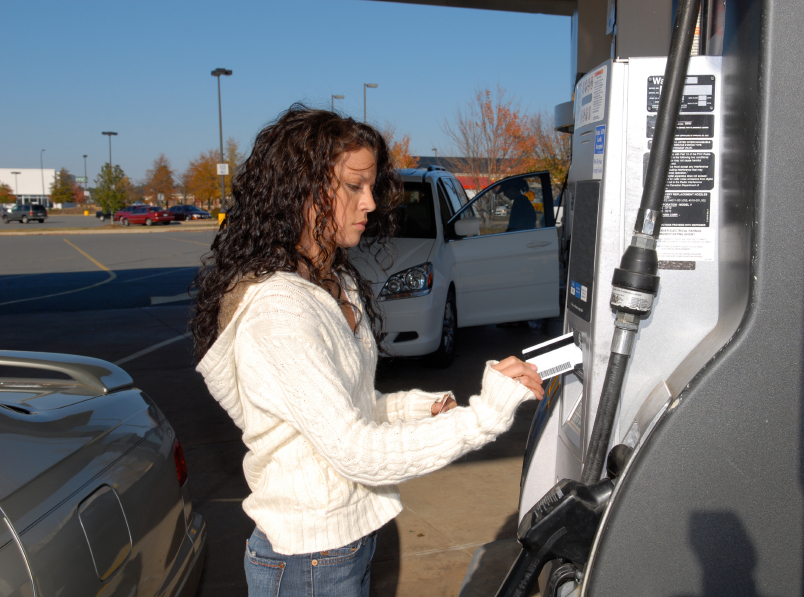
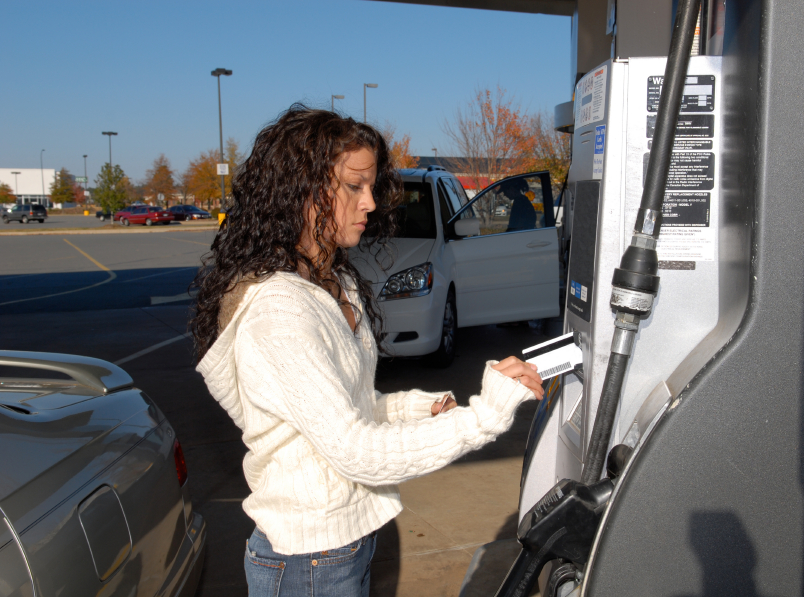
registerSwipe fees recently made another public appearance in the news. Retailers have petitioned the high court to reconsider its March 2014 decision, which upheld debit card swipe fees at 21 cents per transaction as reasonable. This has been a hot topic for all retailers, with NACS being a large player representing the convenience store sector in this battle. Petroleum marketers want the limit lower than 21 cents for obvious reasons. Swipe fees—credit card and debit card—are reported as the second largest operating cost for petroleum marketers, just behind the cost of labor.1

The legal battle with swipe fees has been centered on the Dodd-Frank law passed in 2010 regarding debit card fees. The overall battle with swipe fees, however, encompasses more than just debit card swipe fees. Credit card fees were about 7 cents per gallon in 2011, averaging about 2% per transaction.1 PayPal has an even higher rate starting at 2.9% plus $0.30 per transaction.2

Margins on petroleum in this industry are already small, so any percentage “swiped” by credit card processors has a big impact to petroleum marketer operations. Mastercard and Visa have been named in the current swipe fee lawsuit, but they are by no means the only card processors in the gouging game. Nearly three quarters of all transactions made at the pump are made with plastic—think about how that equates in total swipe fees.3

Intevacon is a proprietary card processor but we offer more services to the petroleum marketer than the standard credit card company. More important to your bottom line, our pricing lets the petroleum marketer keep his/her margins. Convert one of your current Mastercard or Visa customers to a local house account and automate the process through Intevacon.  We offer an online system that empowers the petroleum marketer with all of the controls needed to manage and grow his/her fleet accounts. We also provide the petroleum marketer an advantage to capture loyal fleet accounts by offering the option of online access to the cardholder. Intevacon succeeds when our customers succeed.

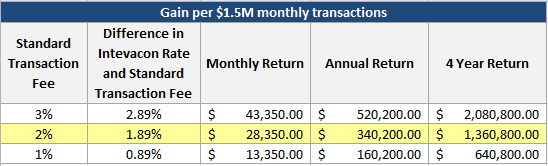
Converting cardholders who currently pay with a standard credit card or debit card to the Intevacon fleet card or prepaid card reaps huge savings every month. If a petroleum marketer converted $1.5 million of his current monthly business to the Intevacon fleet card, the savings from a standard credit card transaction fee of 2% would be approximately $340,200 a year or $1.36 million over four years. The higher the dollar volume on the Intevacon fleet card, the greater the savings from swipe fees. Supplement the fleet card with the prepaid card to get even higher returns and increase cash flow.table
Swipe fees may be a necessary evil for a certain percentage of fueling customers, but there is a large cohort of cardholders who would benefit from the advantages of carrying a fleet card. Get to know your customer base and grow your business with Intevacon.


  1. “Credit and Debit Card Fees.” NACS. Web. April 2014. http://www.nacsonline.com/Research/FactSheets/IndustryIssues/Pages/CreditCardFeesaGrowingChallengeforConvenienceStores.aspx
  2. Paypal. Web. June 2014.  https://www.paypal.com/webapps/mpp/paypal-fees
  3. “2013 Retail Fuels Report.” NACS. 2013. Web. May 2014. http://www.nacsonline.com/YourBusiness/FuelsReports/GasPrices_2013/Documents/CFR2013_FullReport.pdf


Challenging Tradition: Alternative Payment Solutions

For as long as consumers have shopped, merchants have provided payment solutions. Whether it was through a barter system when money got tight or during the advent of the credit card, both buyers and sellers have gravitated to the most economical and efficient payment methods at hand. That is why this season of payment solutions is so fascinating. The trends are definitely shifting, and consumers are choosing with their wallets, literally in this case. Merchants are also seeCaptureking solutions that protect their bottom lines.

Intevacon offers a unique payment solution focused exclusively on the oil marketer—we created this system for the marketer, and our business model is built for his/her benefit. As a card processor, Intevacon provides all levels of card processing data—transaction details, quantities, taxes, product codes, etc.—without having to involve the middlemen.

Think of the traditional credit card processor. When you think of this credit card processor, you also have to think of all of the other players involved—the banks (both the cardholder and the merchant bank), the issuer of the card, the acquirer, etc. Credit card fees continue to increase as each player takes a piece of the pie. With margins for fuel counted in pennies, this cut is noticeable to a marketer. Not only does the marketer sacrifice his/her margin to processing fees, but he/she also loses the relationship to the cardholder.

We have seen traditional banks fall out of vogue more and more in time. An article in CSP News titled “Blowing Up the Bank” starts with the line “The banking system today is going to be totally blown up in the next 10 years.”1 Alternative banking and payment solutions are the way of the future. Another article corroborating this claim quotes the research firm, Packaged Facts, saying that approximately 40% of adults 18 years or older are unbanked.2 With this trend, we will continue seeing a shift away from traditional banking to “non-bank” funding accounts and reloadable prepaid cards.

Several non-traditional players have emerged, amongst them: Google, Paypal, and Amazon. We are excited for this new landscape of payment solutions, as it challenges the status quo and gives both consumers and merchants new options. When considering how you will choose to conduct business, consider your partners carefully. An article recently published in Forbes about the future of mobile payments stated, “Whoever ends up with controlling interests in this new digital ecosystem will reap billions in transaction fees, collect massive amounts of consumer data […].”3

Intevacon’s focus is to provide card processing services to our marketers so that you will be able to grow and protect your margins. Your success is our success. With Intevacon, you will always be in the center of your relationship with your customer. We are transparent and generous with our pricing model, and we offer the best customer service in the industry. Give us a call if you want to learn more about adopting a proprietary fleet card program through Intevacon. Now is the time to take back control of the transactions you are working so hard to achieve.

Contact us at 678-739-4450 or moreinfo@intevacon.com to get more information. http://www.Intevacon.com


  1. “Blowing Up the Bank.” CSP. April 2014. Web. April 2014. http://www.cspnet.com/industry-news-analysis/technology/articles/blowing-bank
  2. “General Merchandise: Prepaid & Financial Services 2014.” CSP. April 2014. Web. April 2014. http://www.cspnet.com/print/csp-magazine/article/general-merchandise-prepaid-financial-services-2014?page=0%2C0&utm_source=SilverpopMailing&utm_medium=email&utm_campaign=Daily%20News%2004-28-2014%20%281%29&utm_content=&spMailingID=45724913&spUserID=MjU0MDQ1OTk0MjkS1&spJobID=423296958&spReportId=NDIzMjk2OTU4S0
  3. “Can PayPal Beat Apple, Google, Amazon And Icahn In The Wallet Wars?” Forbes. March 2014. Web. March 2014.http://www.forbes.com/sites/stevenbertoni/2014/02/12/can-paypal-beat-apple-google-amazon-and-icahn-in-the-wallet-wars/

Building Relationships and Profiting from Repeat Business

Intevacon is all about relationships —we value the relationships that we form with our marketers, and we do everything that we can to facilitate relationships between you and your customers. The Intevacon model puts the marketer directly in the center of the card processing relationship, and this is by design. It turns out that this is also a profirepeattable approach.

A joint study by Manta and BIA/Kelsey found that 61% of small business owners report that half of their annual revenue comes from repeat customers. It also notes that repeat customers spend 67% more than a new customer. Watching this trend, small business owners are starting to invest more resources into developing relationships with their existing customer base.

Are you growing a base of repeat customers? An article by MediaPost notes that many small business owners do not utilize technology to their advantage when it comes to building loyalty and repeat business.

We know that c-stores account for 34.3% of all retail outlets as of December 2013, according to NACS. A recent NPD study found that the average consumer visits a c-store six times in a 30-day period, but that number has decreased by 1.3% in the fourth quarter of 2013. An article in Convenience Store Decisions quotes an NPD convenience store industry analyst saying, “It will remain a challenging and competitive environment in 2014 and retailers will continue to fight for dollars. C-stores can hold on to their base with the right product mix, selection, and quality, all of which are growing reasons why consumers choose the stores they do.”

The Intevacon fleet card and prepaid card are valuable tools to help you maintain repeat visits from your customers, both with consumer and commercial accounts. The proprietary fleet card and prepaid card can be accepted at all of your sites and allows your customers to receive level 3 card processing data. To help manage your accounts, you can give your cardholders access to the system to see their own data and run reports. The Intevacon system is intuitively designed and it gives you all of the controls that your customers want to manage their fleet accounts. With the time saved by using our system, you will have time to turn more new customer business into repeat customer business. Protect your margins by saving yourself from swipe fees, and increase repeat business by providing a fleet or prepaid card.

Margins for Growth with Intevacon

iStock_000009737415SmallIntevacon continues to grow each month in the number of customers who use our system and enjoy the benefits of a proprietary fleet card and prepaid card.  It looks like the industry in general is growing as well.  A Nielson study was published recently stating that the U.S. convenience store count increased by 1.4% in 2013, adding 2,062 stores.1,2  Probably even more striking, the convenience store industry has doubled in size over the last three decades. 1,2    This is not totally surprising considering that consumers increasingly view convenience stores as more than just an opportunity to purchase fuel.  Convenience stores satisfy the demands of on-the-go consumers with their ever-expanding product lines, from fresh foods to a myriad of beverages.  In total, convenience stores comprise 34.3% of all retail outlets according to Neilson. 1,2    Of these convenience stores, 62.8% of them are managed by single-store operators. 1,2

More good news for the convenience store industry—a study from Sageworks indicates that 2013 was a strong year for fuel profits at privately held gas stations, with net profits rising almost 3% on average.3  While this is a great trend, the study also noted that privately held gas station owners experienced very little profit from each gallon of gas because the margins tend to be so thin after factoring in the original wholesale cost, taxes, and swipe fees. 3   As a contrast, convenience store retailers have a lower net profit margin on average than most retailers, with the average privately held company across all industries averaging more than 8% net profit margin. 3   This low net profit margin experienced by marketers is yet another reason why Intevacon is excited to be growing.  We are able to offer an innovative and dependable system to our marketers without the high transaction fees that are typically associated with standard credit cards.  We succeed when our marketers succeed, and that is why we have created a pricing structure that allows for higher margins and keeps the marketer in control of his/her customers.

The convenience store industry comprises an invaluable place in our society.  Intevacon is proud to offer alternative payment solutions to our marketers, both in the form of fleet cards and prepaid cards.  We enjoy growing relationships throughout the industry, and we aim to support our customers through all of their successes with a system that is both flexible and innovative to their needs.

  1. “Convenience Store Count Tops 149,000.”  NACS. January 2014. Web. January 2014. http://www.nacsonline.com/News/Daily/Pages/ND0123132.aspx#.Uuqzt_uYV6s
  2. “Convenience Store Industry Adds More Than 2,000 Stores.” CSP.net. January 2014. Web. January 2014. http://www.cspnet.com/industry-news-analysis/corporate-news/articles/convenience-store-industry-adds-more-2000-stores
  3. “Fewer Expenses, Bigger Margins in 2013.” CSP.net. January 2014. Web. January 2014. http://www.cspnet.com/fuels-news-prices-analysis/fuels-analysis/articles/fewer-expenses-bigger-margins-2013

Contact us at 678-739-4450 or moreinfo@intevacon.com to get more information.  http://www.Intevacon.com

Becoming a Convert

One of the mosshutterstock_1338696t common questions that we hear from new customers relates to the process and timing of conversion to our system.  Because of the intelligent design built into our system, conversion and training are really very simple.  Intevacon has a team of dedicated members to help our customers reach their target Go Live schedules.  We can move as fast as needed to get our customers up and running on the Intevacon system.

As a summary, below are the five basic steps for conversion onto the Intevacon System:

  1. Signed Contract
  2. Data
    • Site list and account information sent to Intevacon
    • Data imported by Intevacon
  3. Testing
    • Gateway device connected at site
    • Transaction test with POS and product codes
  4. Training
    • Intevacon system training
    • Additional system set-up (if required)
  5. Go Live

The process is direct, and Intevacon is available to assist every step of the way.  Our timelines vary from marketer to marketer, with conversion taking less than a week (whew!) to over a month depending on the marketer.  Marketers with many sites will need a technician to visit each site to set up the gateway device (small device that allows the POS to talk to our system) and conduct a swipe test at the POS.  In most cases, card account data can be automatically imported into our system, eliminating the need to manually key any account information.  For customers exporting to an accounting package, we have a transfer file that can be downloaded and sent to your accounting representative for testing.

Once customers are connected to our system, we provide remote training, and we are always available for additional questions about using the system.  We repeatedly hear about how easy it is to use our system, and the online log-in allows customers to have access from any computer to see real-time transactions.  Intevacon’s system was built for our marketers, and we continually innovate and improve to meet the needs of our customers.  Now that you know how easy it is to convert, are you ready to set up your Go Live date?


Settling Swipe Fees

iStock_000002480172SmallOn Friday, December 13th, US District Judge John Gleeson approved the $5.7 billion class-action swipe fee settlement that has been in discussion since 2012.  This settlement is the offspring of private anti-trust litigation that was filed by NACS in 2005 against major credit card companies and banks.  The approved settlement was stated to be “woefully inadequate”, and therefore, NACS elected to opt out of the settlement.  Now that the settlement has been passed by Judge Gleeson, retailers are said to be left in worse shape than if they had just lost the trial.

This legal decision was very important to marketers, as credit-card swipe fees cost merchants and their customers an estimated $30 billion a year1.  Now that the settlement has passed, merchants will be even less protected from unreasonable rates by the credit card companies.

Here is an excerpt of the response from NACS:

The proposed settlement would give merchants a limited right to surcharge that is too complex to implement and would allow the credit card companies to continue to set prices for their member banks. Furthermore, the proposed settlement would do nothing to give merchants competitive network routing choices, and also lock-in many anti-competitive activities of the credit card companies forever2.

As a payment solutions company, we can only offer our condolences to the merchants whose livelihood is affected by this ruling.  We can also offer a solution to marketers who want to capture back the revenue lost to the major credit card companies.  The Intevacon Proprietary Fleet card allows marketers to offer their customers a payment solution with the capability to leverage card controls, a perfect way to increase loyalty with card holders.  Our rates give marketers an advantage and they also leave margin to reward fuel customers with discounts and other incentives.  Our Prepaid card nicely complements the function of the Fleet card by providing customers with a cash-based method of payment and the convenience of a card.  In all of our efforts, we aim to empower and partner with the marketer.

The petroleum industry fuels the nation’s activity.  At Intevacon, we aspire to equip our marketers with the best solutions and the best pricing to win at this endeavor.  For more information about our fleet and prepaid card solutions, view an introductory presentation here, or reach out at moreinfo@intevacon.com.

http://www.Intevacon.com

Payment Card Security

 The only real security that a man can have in this world is a reserve of knowledge, experience and ability.  Henry Ford

While Henry Ford’s quote is true, we’d like to suggest that there are a few other ways to be secure.  Payment solutions have long been a target for security fraud, but with the right precautions, your fleet anStateLibQld_1_114904_Doctor_and_Mrs_David_Hardie_in_their_Model_T_Ford_automobile,_ca__1913d prepaid users can protect themselves and build trust with your brand and your processes.  Because our fleet and prepaid cards connect to our host for processing, all cards issued by our marketers must be used at a recognized site associated with the card issuer.  This adds an additional layer of exclusion for any inappropriate card activity.  In addition, the Intevacon Fleet Card and Prepaid Card can be restricted with a unique PIN number to help protect card users from fraud. 

Card fraud can occur in many different ways.  The biggest way that marketers can protect their cardholders is to enforce PINs for each card.  The approach for security between fleet cards and prepaid cards differs due to the nature of the relationship between the marketer and the card user.  Fleet Card account holders can manage their accounts and create PINs for fleet card users within the Intevacon system by assigning either an explicit PIN for the card or a driver PIN for the driver.  In addition, fleet cardholders can work with card issuers to apply restrictions based on the transactions that are expected on the card.  Purchase limits also ensure that a dollar amount never exceeds the expected value for the account. 

Prepaid Cards, however, involve an anonymous relationship with the card user, and therefore, it is important to order prepaid cards with PINs already assigned.  While PINs are not required for Prepaid Cards, we highly recommend this additional layer of protection.  Each Prepaid card number is provided to the marketer with both a PIN and a reference number—both of these numbers are important for card users who need to report a card as missing or stolen.    We recommend that Marketers order cards with a key tag that includes a scratch off of the PIN and reference number.  An example of this design can be found here.  Aside from protecting the integrity of the card, PINs also instill confidence with card users and therefore encourage use of the card.  Confidence is important for fleet users, but we find it to be a critical element for Prepaid users.  It is also a critical element in protecting cashiers from the temptation or the accusation of fraudulently accessing funds or loading funds onto the Prepaid Card.  Remember, the Prepaid Card functions as cash, so without the restriction of a PIN, anyone is able to make purchases with the card.

While proprietary fleet and prepaid cards are not usual targets for fraud, the statistics of card fraud in general should give card users caution.  According to the Nilson report, issuers, merchants, and acquirers of credit, debit, and prepaid general purpose and private label payment cards worldwide experienced gross fraud losses of $11.27 billion in 2012, an increase of 14.6% from the previous year.1  Another universal method of protection includes concealing the card number and PIN from observation—when typing the PIN number at the register or at the pump, suggest that your card users cover the keypad to block any viewers or cameras from capturing the PIN.  Skimmers and video cameras have been cited as methods that criminals use to capture card information.2  Lastly, partner with your card users to monitor card transactions for any unusual activity.  Fleet cardholders can access transactions in real time through our system, and Prepaid users can view transactions at this website as long as they have a PIN.  By keeping an eye on reports, card users will be able to detect unusual activity and inactivate cards in real time.

While we continue to have faith in humanity, we cannot help but advise that marketers and card users protect themselves with the easy and available methods of protection offered through the Intevacon System.

Marketing the Prepaid Card

Consumers are choosing prepaid cards as a method of payment in growing numbers. With such a broad market, the Intevacon Prepaid Card offers functionalities that appeal to all of your target consumers. 

Use the Intevacon Prepaid Card to:

  • Grow your customer footprint
  • Increase spending and cash purchases
  • Establish a relationship of loyalty with your customers

Consumer advantages of using the Intevacon Prepaid Card include:

  • Allows the user to pay at the pump instead of pre-paying for fuel with cash.
  • The Prepaid Card can also be used inside at the register.
  • Discounts can be offered by the marketer for cash purchases using the POS roll-back feature.
  • Purchase restrictions are available to specify how the prepaid card can be used.
  • A required PIN number allows for enhanced security.  Recovery of a lost card can be achieved with the provided reference number.
  • Card is reloadable for repeated use.
  • No fees are subjected to Prepaid card users.

Below is a list of target consumers and applications for the Prepaid Card.  This list can help you determine how you want to market to your customer base.7K0A0426

  • Millennials are attracted to the freedom from institutions that is permitted with the prepaid card.
  • Unbanked, debanked, and underbanked individuals are applicable, regardless of credit.
  • Employers reward their employees with Prepaid bonuses and incentives.
  • Businesses provide give-away promotions to customers and prospects.
  • Businesses use the prepaid card as a fleet card alternative.
  • Non-profits give Prepaid cards to individuals in need and can impose restrictions on purchased products.
  • Philanthropists give Prepaid cards to their philanthropy of choice like a women’s shelter or the local church.
  • Regular Consumers will enjoy the benefits of cents per gallon off of their purchase.
  • Regular Consumers use prepaid cards as a budget resource for staying out of debt.
  • Gift Givers give the Prepaid card as a gift for fuel or retail purchases for events like holidays, birthdays, thank yous, graduation.
  • Parents buy prepaid cards for teenage or college age kids.

Do you have a marketing technique that you would like to share?  We’d love to hear from you!

Evaluating the Prepaid Card Market

Intevacon has expanded into the Prepaid Card business, giving marketers more opportunities to capture revenue while meeting the needs of their customers. As noted in the latest blog, the popularity of Prepaid Cards only continues to grow, and the demographic of Prepaid Card users adds a new opportunity for marketers.

While the opportunity of prepaid card services is very large—$309B was loaded onto U.S. closed-loop prepaid cards in 2012—now is the time for marketers to take advantage of the prepaid trend and educate their customers on the value of making purchases with the Intevacon Prepaid Card.1

A recent article titled “Banks Can’t Afford to Miss the Prepaid Opportunity” only highlights the potential revenue associated with Prepaid Cards.1 Banks are viewing the Prepaid Card as an opportunity to generate fees for activities such as card activation, interchange fees, and reloading. The fees imposed by banks have instigated a new segment of consumer—the “debanked”.2  According to an Aite Group report, there is a $1 billion dollar prepaid card opportunity with these “debanked” consumers who are looking for alternative payment methods from traditional banking accounts.2  These “debanked” consumers are looking for alternative payment methods like the Intevacon Prepaid Card.

While prepaid caiStock_000002480172Smallrd users have historically been viewed as the unbanked, underbanked, and now the “debanked”, there is also a large percentage of the millennial generation, 41%, who say they are likely to use a general purpose reloadable card instead of using a bank account.3 Not far behind, 24% of individuals aged 35-49 make the same claim.3  Even better, 70% of atm users buy prepaid cards, and 9 out of 10 atm users who buy prepaid cards would prefer to purchase their prepaid card from a non-financial institution such as a convenience store.4  In addition, a study by Synergistics Research Corp found that 23% of consumers are likely to buy their prepaid cards at a convenience store.3

As the demographic of Prepaid Card users has expanded, so have the purposes for purchasing a prepaid card. Many consumers view the prepaid card as an opportunity to budget, a way to manage money for teenagers, or an alternative to holding a bank account. Businesses can also benefit from the Intevacon Prepaid Card by using the prepaid card as an incentive for engagement. The Intevacon Prepaid Card is also a great alternative for customers who want to carry a fleet card but do not qualify for credit. The popularity of prepaid cards only increases the marketing capacity that can be applied with the Intevacon Prepaid Card.

1. “Banks Can’t Afford to Miss the Prepaid Card Opportunity.” ATM Marketplace. September 2013. Web. September 2013. http://www.atmmarketplace.com/whitepapers/7193/Banks-Can-t-Afford-to-Miss-the-Prepaid-Card-Opportunity?utm_source=NetWorld%20Alliance&utm_medium=email&utm_campaign=EMNAAMC09252013
2. “The Debanked: A US$1 Billion Prepaid Debit Card Opportunity.” Aite. February 2012. Web. September 2013. http://www.aitegroup.com/Reports/ReportDetail.aspx?recordItemID=899
3. “Prepaid Cards—Competition or Bridge to Checking?” Synergistics Research Corporation. April 2013. Web. September 2013. http://www.synergisticsresearch.com/index.php?option=com_content&view=article&id=72&Itemid=127
4. “Better ATM Services Previews New Research on ATM Use and Prepaid Users.” Payments Journal. February 2013. Web. September 2013. http://www.paymentsjournal.com/Page.aspx?id=15322&terms=+%40TaxCategory+%22%5CStrategy+Sessions%5CSelf+Service+and+Convenience%22

Trends to Watch: The Growth of Prepaid Cards

Intevacon recently made its Prepaid Card available to marketers, and we couldn’t be more excited.  The Prepaid Card empowers marketers to offer customers the ability to pay with cash but have the convenience of a payment card.  In addition, the marketer can use the Prepaid Card as a tool to offer discounts as an incentive for using cash as a method of payment.  Of course, every marketer understands the value of cash payments.  With cash payments, especially cash payments loaded onto a card for future purchases, the marketer is able to increase cash flow, eliminate swipe fees, and encourage future purchases.

The Prepaid Card solution seems to only be gaining ground in popularity as an alternative to the credit card.  Read a few recent statistics below:

Prepaid card use is growing nationally and globally:

  • Global prepaid growth is expected to grow at an annual rate of 22% through 2017, reaching $822B.1
  • As of March 1, 2013, the US government started enforcing a law requiring social security and other government benefits be paid electronically either as a direct deposit or onto a prepaid card.2
  •  Corporations have started utilizing prepaid cards as an alternative means for paychecks, meal vouchers, and healthcare reimbursements.  The result is a reduction in fraud, processing costs, and the carbon footprint of using paper.  The total commercial prepaid opportunity is projected to reach $325B  by 2015 globally.1

Your customers are great candidates for the Prepaid Card:

  • 8.2% of US households are unbanked. This represents 1 in 12 households in the nation, or nearly 10 million in total.3
  • 20.1% of US households are underbanked. This represents one in five households, or 24 million households.3
  • 25% of households have used at least one Alternative Financial Service (AFS) product in the last year, and almost one in ten households have used two or more AFS. In the last 30 days, 12 percent of households used an AFS product.3
  • The general population also views Prepaid Cards as smart cash.  Approximately 48% of the global prepaid open loop opportunity lies within the general population of banked consumers looking to segment their spending on top of their existing payment cards.1
  • Millennials are also quickly adopting prepaid cards as a preferred method of payment.  In June 2013, USA Today reported the results of a survey of more than 1,000 people ages 18 to 34 finding that while 92% currently use a bank, 45% say they have also used outside services including prepaid cards, check cashing, pawn shops and payday loans.4
Resources:
  1. “2012 Global Prepaid Sizing Study, Commissioned by Mastercard: A Look at the Potential for Global Prepaid Growth by 2017.”  Advancing Insights, Advancing Commerce. July 2012.  Web. Sept 2013. https://www.partnersinprepaid.com/pdf/a-look-at-the-potential-for-global-prepaid-growth-by-2017.pdf?maincategory=TOPICSsubcategory=RESEARCH
  2. “US Treasury Requires Electronic Federal Benefit Payments.”  Go Direct. Web.  Sept 2013.  http://godirect.org/
  3. Burhouse, Susan and Osaki, Yazmin. “2011 FDIC National Survey of Unbanked and Underbanked Households, Executive Summary.”  FDIC. Sept 2012. Web. Sept 2013. http://www.fdic.gov/householdsurvey/
  4. Malcom, Hadley. “Millennials Big Fans of Prepaid Cards, Payday Loans.” USA Today. June 13, 2013.  Web. September 2013.  http://www.usatoday.com/story/money/personalfinance/2013/06/13/millennials-banking-alternatives/2408861/